
Let’s start with something that sounds counterintuitive: pothos doesn’t actually want rich, heavily amended soil. That lush, jungle-plant energy it brings to a shelfie? It didn’t come from nutrient-dense earth. Pothos evolved as an understory climber — clinging to trees in loose, fast-draining forest floor material, never sitting in pooled water, never drowning in organic matter that stays wet for days. The plant you’re keeping alive in a corner of your apartment has deep opinions about its growing medium. It just can’t tell you directly.
That’s what this guide is for. We’re going to get specific about what pothos soil actually needs, what happens when you get it wrong, and how to build or buy a mix that makes your plant genuinely thrive rather than just survive. The difference shows up in the leaves — more on that later.
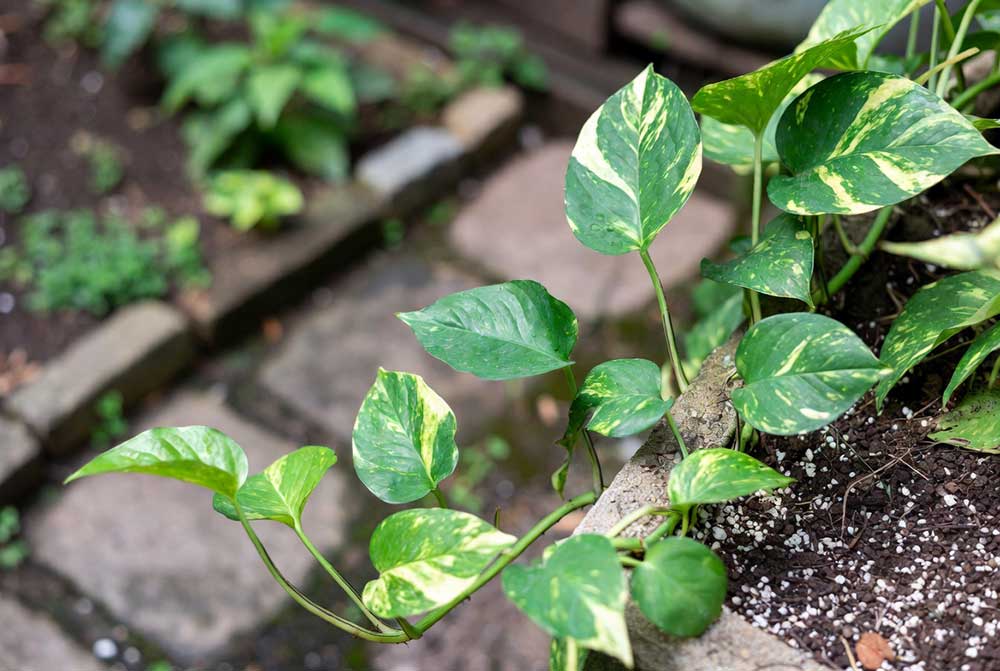
What Pothos Soil Actually Needs to Do
Soil for pothos has one primary job above everything else: drain fast and stay airy. Not “drain reasonably well” — fast. A properly mixed pothos medium should feel slightly damp two days after watering, not wet. If you can squeeze a handful of your current soil and water runs out freely, you’re in wet territory and root rot is already a possibility.
The science behind this is straightforward. Pothos roots are oxygen-dependent. They pull dissolved oxygen from air pockets in the soil — and when soil compacts or stays saturated, those pockets disappear. Roots in anaerobic (oxygen-depleted) conditions don’t just struggle to absorb nutrients; they begin to break down. The plant above continues looking fine for weeks, sometimes months, while its root system deteriorates below the surface. By the time you see yellowing leaves or a mushy stem base, the problem started long before.
“The most common pothos killer isn’t neglect — it’s care. Specifically, it’s someone watering a plant in dense soil on a schedule rather than reading the soil.”
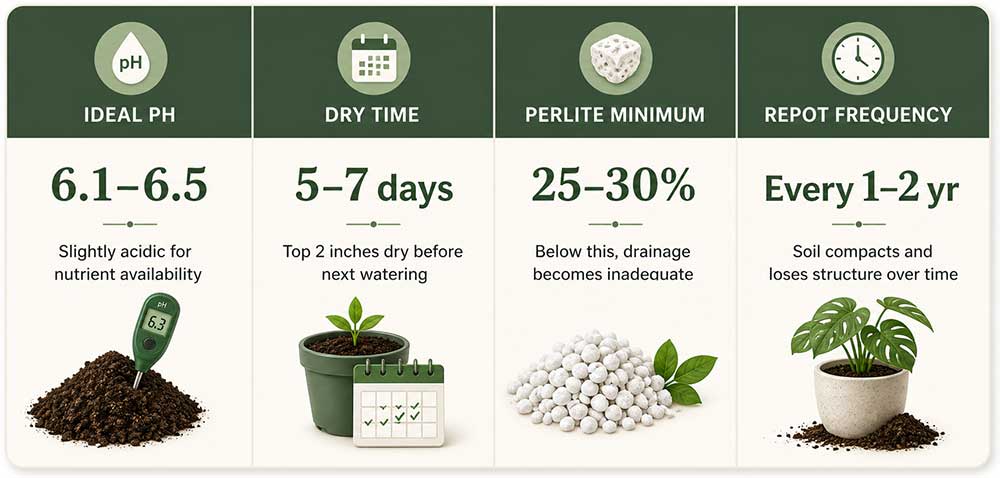
Beyond drainage, pothos soil needs a slightly acidic pH — between 6.1 and 6.5. This range keeps iron, manganese, and other micronutrients soluble and available to roots. Drop below 5.5 and the soil becomes toxic-level acidic. Push above 7.0 and nutrients start locking out despite being physically present in the mix. Most tap water sits around 7.0–8.0, which is why long-term tap-watered pothos can develop slow, mysterious decline that no amount of fertilizer fixes — the pH has drifted and the plant can’t access what’s in the soil.
The Problem With Store-Bought Potting Mixes
Standard all-purpose potting soil — the kind that fills big-box store shelves in spring — is engineered for moisture retention. That’s what most vegetable and flower gardeners need. But it’s the wrong priority for pothos, which is why buying a bag of generic mix and using it straight is one of the most common ways to set a pothos back.
These mixes typically contain peat moss or coco coir as their primary base, which holds water beautifully, plus some perlite for drainage — but usually not enough. The ratio you’ll find in most commercial blends is roughly 70% moisture-retentive material to 30% drainage amendment. For pothos, that ratio should be closer to 50/50, or even 40% base to 60% drainage in low-light indoor environments where soil dries slowly.
The amount of light your pothos gets directly changes its ideal soil mix. A pothos in a bright window dries faster and can tolerate slightly denser soil. The same plant in a dim hallway needs a much chunkier, faster-draining mix because its soil will stay wet for twice as long between waterings. One mix does not fit all placements.
That said, commercial mixes aren’t useless — they’re just starting points. The fix is simple amendment, which we’ll cover in the next section. The bigger problem is when people buy “succulent and cactus mix” thinking it’s the drainage-focused solution for pothos. Cactus mix drains fast, yes, but it’s often too fast and too nutrient-poor for a plant that still needs consistent moisture and some organic matter. Pothos isn’t a cactus. It just wants soil that breathes.
Building the Right Mix: Ratios That Work
The ideal DIY pothos soil has three components working together: a base that provides some nutrient content and moisture retention, a drainage amendment that creates air pockets, and optionally a chunky organic element that mimics forest floor material.
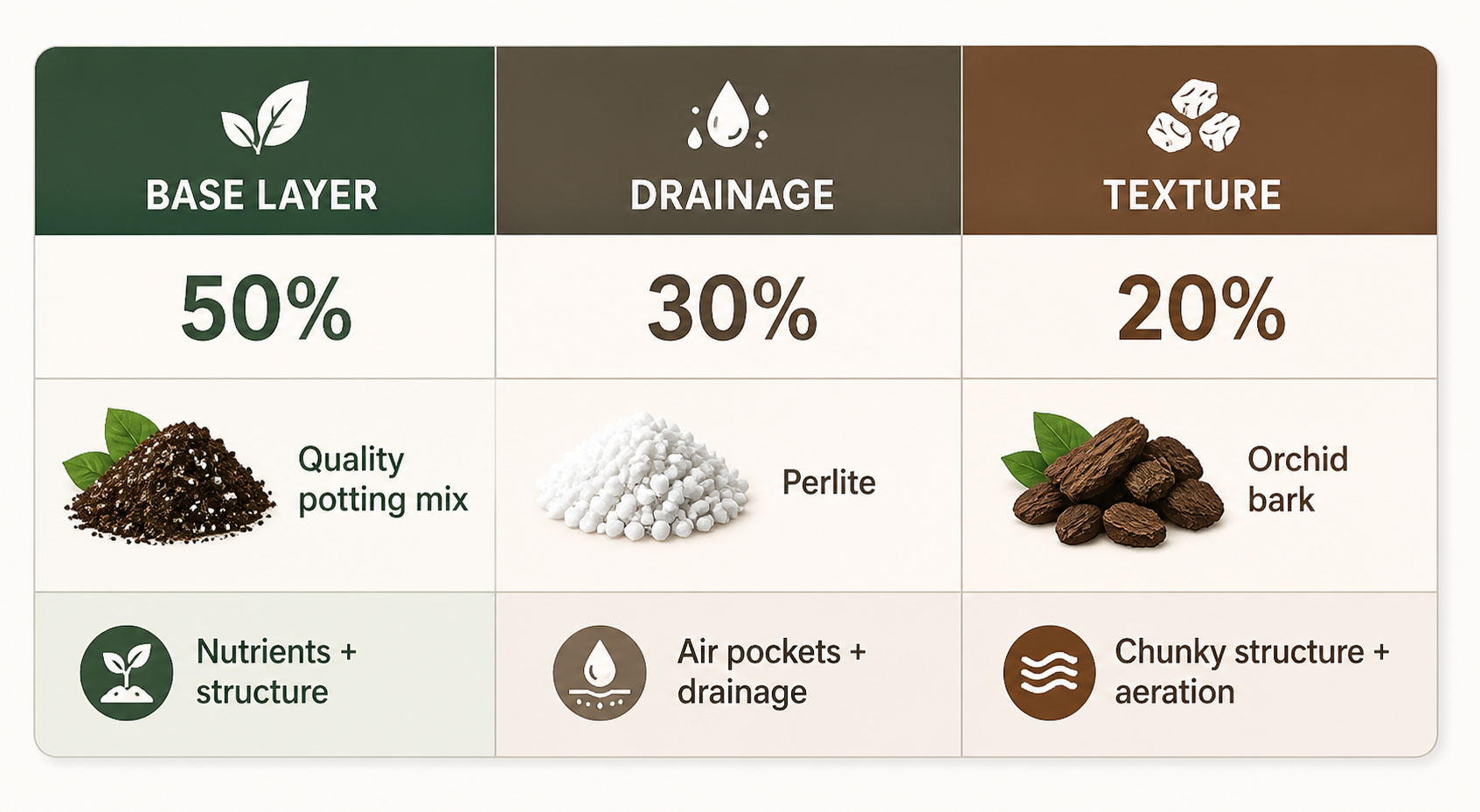
Perlite is non-negotiable in this mix. Those small white volcanic glass particles don’t compress, don’t break down, and don’t hold water — they hold air. Adding 30% perlite to any base mix meaningfully transforms its drainage profile. A good quality bag of horticultural perlite (not the fine-grain craft store version, which compacts) costs very little and genuinely changes outcomes.
Orchid bark is the upgrade that most pothos guides don’t mention. Chunky bark pieces create macro air pockets in the soil — spaces large enough that roots grow into and through them, building the kind of robust, fibrous root system that only develops in airy, well-structured media. You’ll see the difference when you eventually repot: a pothos in bark-amended soil has dense, white roots that fill the pot. A pothos in dense soil has sparse, sometimes brownish roots that circle the edges.
Reading Your Pothos to Diagnose Soil Problems
Your plant is constantly communicating its soil situation through its leaves, stems, and growth pattern. Once you know the language, you can often diagnose a soil problem before it becomes a crisis.
| What you see | What it likely means | Soil-level fix |
|---|---|---|
| Yellow leaves, especially lower ones | Overwatering in dense soil, or pH too high locking out nutrients | Let soil dry fully; test pH; consider repotting into amended mix |
| Brown, crispy leaf tips | Fertilizer salt buildup in soil, or soil pH too low | Flush soil thoroughly with water; reduce fertilizer frequency |
| Pale, washed-out leaves despite good light | Nutrient deficiency from poor soil or pH lockout | Test pH first; amend or repot before adding fertilizer |
| Small new leaves, slow trailing | Compacted soil limiting root development | Repot into fresh chunky mix; roots can’t expand in dense medium |
| Mushy stem at soil line | Root rot from chronic overwatering or poor drainage | Immediate repot; trim rotted roots; fresh well-draining mix only |
| Wilting despite moist soil | Root rot (roots can’t absorb water even though it’s present) | Same as above — this is the late-stage version of the same problem |
When to Just Repot vs. When to Amend
There’s a practical decision point that most guides skip over: you don’t always need to repot to fix a soil problem. Sometimes amendment in place — top-dressing with perlite, flushing accumulated salts, or aerating compacted soil with a chopstick — buys you enough time and improvement to skip a full repot until the right season.
Repot when: the root system is clearly bound (roots circling the drainage hole), the soil has become hydrophobic (water runs straight through without absorbing), or you’re dealing with suspected root rot that needs visual inspection. Don’t repot in winter unless it’s a genuine emergency — the plant’s growth has slowed and it recovers from root disturbance much more slowly in cold months.
Amend in place when: the plant is healthy but you suspect the soil is getting dense over time (which it does — organic matter breaks down and compresses over months). Aerate by pushing a chopstick through the soil in several places, and top-dress with a layer of perlite. This won’t transform bad soil, but it meaningfully improves drainage and oxygen flow in soil that’s just starting to compact.
Soil Mixes for Different Pothos Situations
Not all pothos are in the same situation, and the best soil mix varies by context. Here’s a decision framework built around the most common growing scenarios.
| Your situation | Recommended mix | Why it works |
|---|---|---|
| Low-light indoor (office, hallway) | 40% potting mix + 40% perlite + 20% orchid bark | Soil dries very slowly in low light; needs maximum drainage |
| Bright indirect light (near window) | 50% potting mix + 30% perlite + 20% coco coir | Faster drying allows slightly more moisture-retentive base |
| Outdoor or patio pothos | 50% potting mix + 25% perlite + 25% coarse sand | Wind and heat dry soil faster; coarse sand adds weight and stability |
| New cutting being established | 100% perlite or sphagnum moss alone | Cuttings root better in a medium focused on aeration and moisture without nutrients |
| Terracotta pot | Standard 50/30/20 mix | Terracotta wicks moisture; standard mix won’t dry too fast |
| Plastic or ceramic pot | 40% potting mix + 40% perlite + 20% bark | Non-porous pots hold moisture longer; needs chunkier drainage |
The Long Game: Soil Health Over Time
Fresh potting mix is at its best in the first six to twelve months. After that, organic matter breaks down, perlite migrates to the surface, and the pH shifts as fertilizer salts accumulate. This is normal — but it means soil maintenance is an ongoing part of pothos care, not a one-time setup decision.
A simple annual rhythm works well: test soil pH every spring (inexpensive pH meters are accurate enough for home use), flush the soil with distilled or rain water in late winter to clear salt buildup, and plan a full repot into fresh mix every one to two years. If you’re fertilizing regularly during growing season, flush every three to four months regardless.
“The plants that look effortlessly lush in someone else’s home aren’t lucky genetics — they’re in soil that’s been maintained, not just watered.”
There’s something quietly satisfying about getting soil right for a plant that most people treat as unkillable. Because pothos doesn’t just survive in good soil — it transforms. The leaves get larger. The trailing vines get longer between internodes. The color deepens. The plant starts doing what pothos actually does in the wild: climbing, reaching, filling space with the kind of vigorous growth that makes a room feel genuinely alive. That transformation starts with what you can’t see, six inches underground, where roots either have what they need or they don’t.
Soil health checklist
- ✓Never use straight commercial potting mix without perlite amendment
- ✓Target pH 6.1–6.5 (test with an inexpensive soil pH meter)
- ✓Add minimum 25–30% perlite to any base mix
- ✓Adjust mix ratio based on pot type and light conditions
- ✓Water only when top 2 inches of soil are dry
- ✓Flush soil every 3–4 months if fertilizing regularly
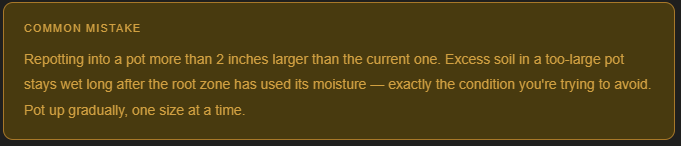
- ✓Repot only one pot size up at a time
- ✓Repot in spring, not winter
- ✓Aerate compacted soil with a chopstick between repots
- ✓Replace soil entirely every 1–2 years regardless of pot size
Growing observations based on Epipremnum aureum (golden pothos) and related cultivars including Marble Queen, Neon, and Manjula in container growing conditions. pH ranges and mix ratios reflect temperate indoor environments; tropical outdoor growing may require different moisture profiles. Soil pH testing recommended with a calibrated digital meter rather than test strips for accuracy in the 6.0–6.5 range.
